Colorado’s SB 24-174 did something new. It required local governments across the state to take a data-driven look at their own housing needs. As these housing needs assessments (HNAs) are coming in from communities as diverse as Colorado Springs, Denver, and Greeley, the data tells a surprisingly consistent story: The housing we have and the housing we’re building won’t meet our needs.
HNAs across the state highlight that this gap isn’t in single-family production. The gap is in workforce housing, smaller units, rentals, and infill development that current zoning largely prohibits. Simply put, there is a missing attainable “middle” of the market. Of equal note is that across HNAs, the obstacles standing in the way of building this “middle” are similar in every community.
85% of Coloradans live in Colorado’s Front Range, so we focused on the four assessments that cover most of the region: (1) the Denver Regional Council of Governments (DRCOG); (2) Larimer County; (3) City of Colorado Springs and El Paso County; and (4) Weld County.
Together, they point to three takeaways that tell a similar story of how we got here, why our housing stock and pipeline are falling short of what communities need, and why the barriers to fixing it persist. In the following three takeaways we showcase the assessments’ main findings, provide our own analysis, and feature relevant excerpts from the four selected HNAs.
1. Housing underproduction amidst growth got us here.
The Front Range housing shortage can be traced back to one root cause: a lack of building despite a growing population (Figure 1). During the 2010s, Colorado’s population grew by 14.8 percent, but its housing stock grew by only 12.6 percent. This isn’t breaking news, but it is the central framework in understanding that when supply chronically trails demand, scarcity and price pressures follow – especially at the bottom of the market. Larimer County’s HNA summarizes, “the rate of housing unit growth plays a key role in affordability: when growth cannot accommodate demand, prices rise.”
Population growth has outpaced housing production.
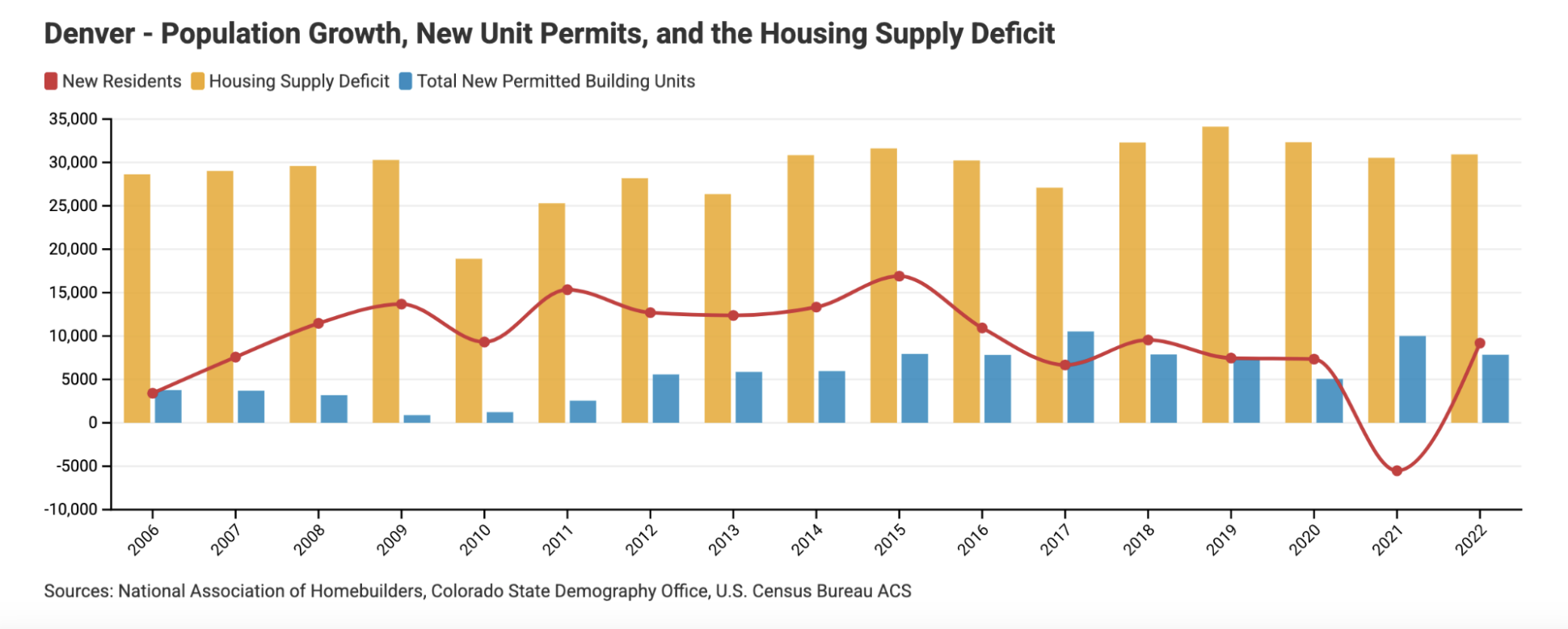
Figure 1: Bar graph showing supply deficit (yellow) compared to newly permitted units (blue) overlaid with a residential growth trend line from 2006-2022. Source: Common Sense Institute’s Housing Affordability Report.
As HNAs begin to quantify the gap, we continue to see external analyses tell the same story. A 2024 Up for Growth report found that Colorado nationally ranked 8th overall in underproduction, with four major Front Range urban areas among the top 100 underproduced (Denver-Aurora-Lakewood 17th, Colorado Springs 42nd, Greeley 76th, and Fort Collins 94th). Meanwhile, the HNAs estimate that current shortages and future production needs number in the tens of thousands (Figure 2). Simply put by El Paso County, “rising jobs-to-housing ratios are a sign of mounting housing demand and may also lead to affordability pressures, workforce displacement, and longer commutes as workers struggle to find housing near jobs.”
Existing Housing Unit Shortage and 10-Year Future Need
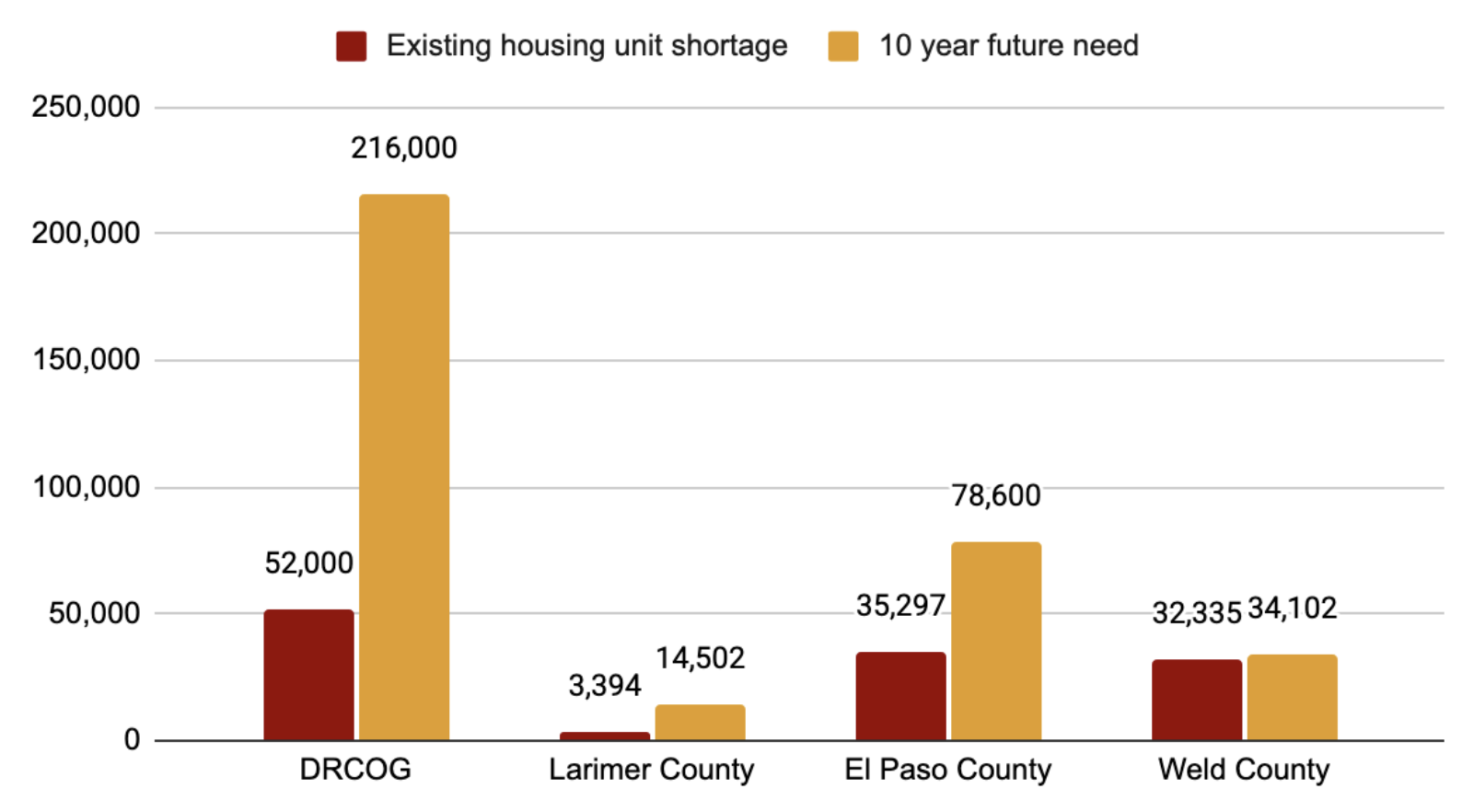
Figure 2: Bar chart comparing the current housing unit shortage (red) to the ten year need (yellow) identified in each respective HNA.
Population growth, particularly in-migration to the state, has been driven by job growth. As local leaders successfully attracted jobs over the past five years, three of the four examined regions added jobs at a faster rate than they added homes (Figure 3).
Job growth and housing unit growth by county (2020-2024)
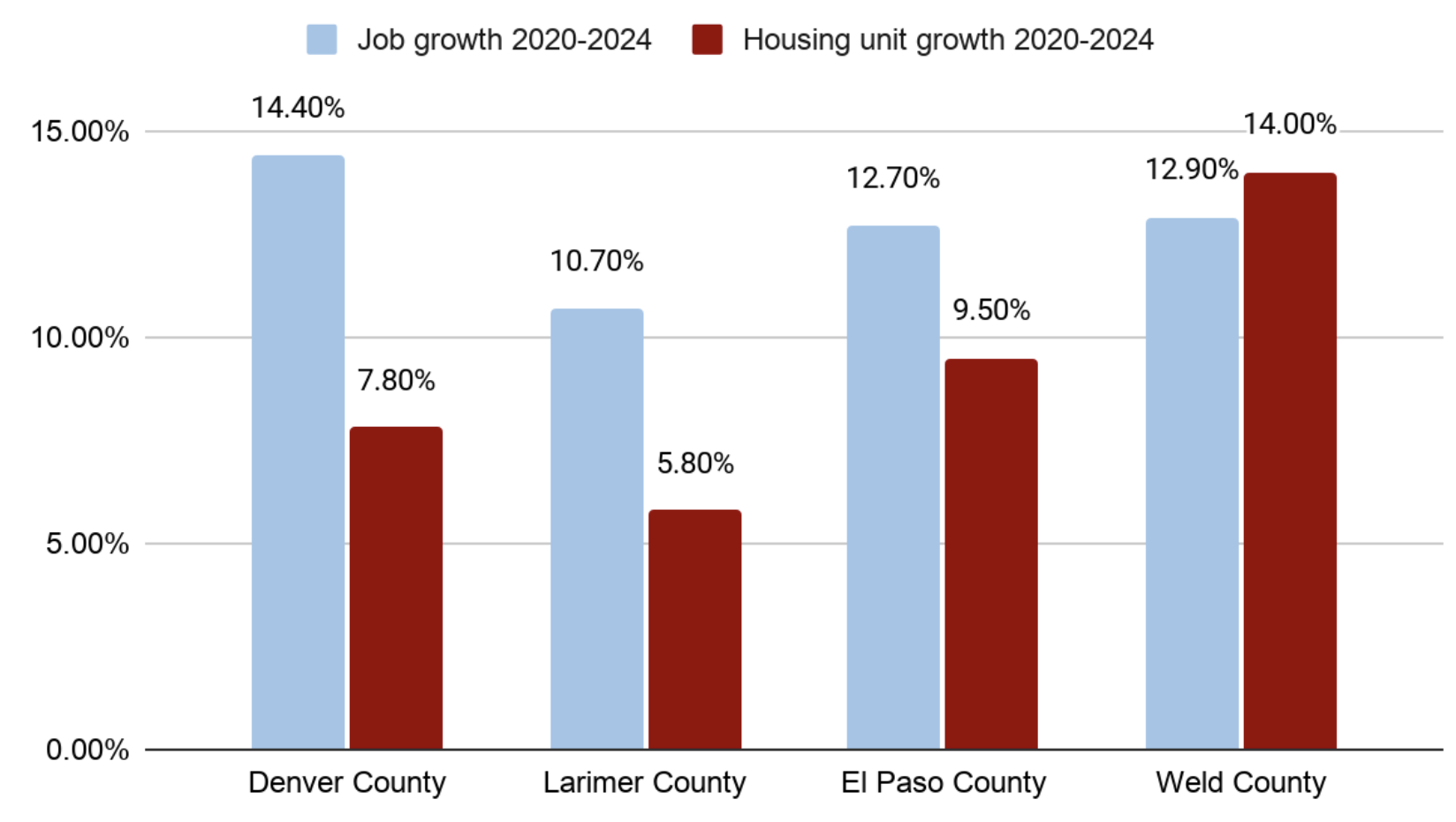
Figure 3: Bar chart comparing the percentage of job growth (blue) versus housing unit growth (red) between 2020-2024 in each county. Percentages used are based on the State Demography Office Estimates and Forecasts county level data for jobs by sector (total jobs) and household estimate (total units).
As employment-driven population growth outpaces housing, some workers are pushed out of their city in search of housing they can afford. But with transportation being the second largest household cost in Colorado, it may not be as economical to live farther from the workplace as one might think. In Fort Collins around 60% of the workforce commutes in from out of town, while in Weld County 67% of the population is employed outside of the county.
Weld County’s HNA states that “affordable housing options in suburban or rural areas may attract people willing to commute longer distances, but this can also lead to urban sprawl and increased spending on transportation.” These long commutes increase traffic and pollution across the board, reminding us that these challenges are faced by everyone and should be solved through regional collaboration. To save workers time and money, attainable housing opportunities must be available in cities to accommodate the needs of working families.
As housing production catches up, it must do so in economically and geographically apt ways. DRCOG describes this opportunity as one where “better matching of job and housing locations creates more options for housing, shortens commute times, and eases strain on the region’s transportation systems.” It is increasingly important that units are created within job centers, focusing on both rental and homeownership opportunities for all income levels.
2. The mismatch between housing needs and existing housing stock
Spread across the Front Range, communities’ localized needs are more alike than one might expect. Statewide, the population is aging, household size is shrinking, and home prices are outpacing wages. Simultaneously, we see the greatest housing demand across Front Range communities for workers earning less than 80% of area median income (AMI) with a heavy concentration of unmet need on the 0-30% end of that scale.
In addition, El Paso County states, “that the limited housing diversity in these communities may constrain options for renters, seniors, and smaller households.” These factors are described in every HNA with the same general consensus: We need more diverse housing types.
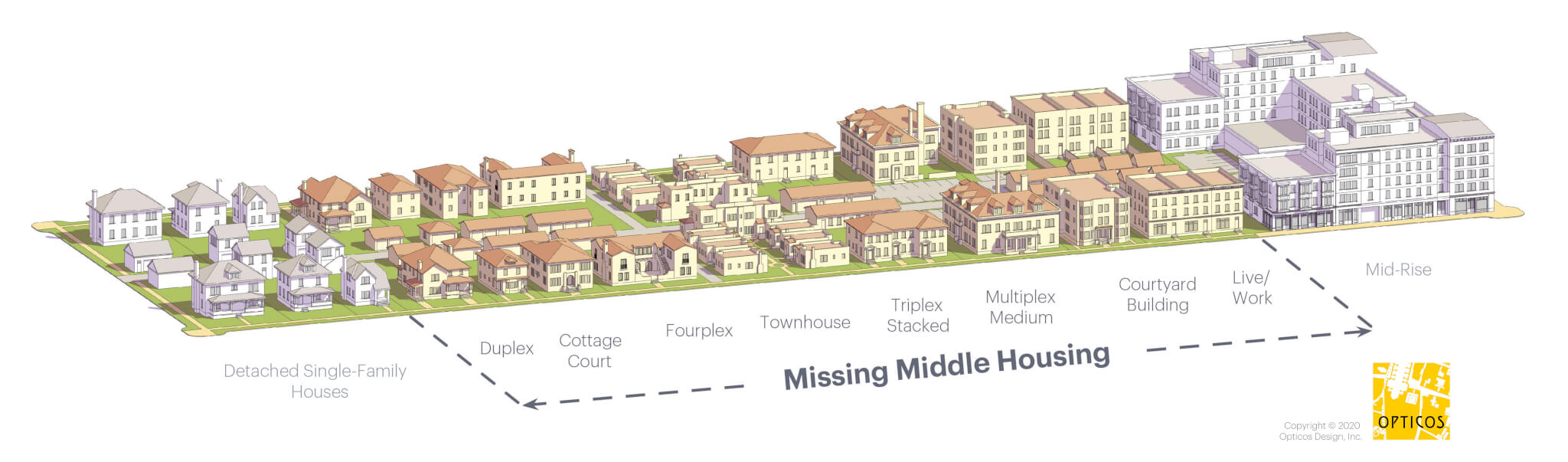
Image 1: Missing middle housing is illustrated as part of the continuum of housing between traditional detached single family homes and larger apartments. Source: https://missingmiddlehousing.com/about/
In the current housing landscape, over two-thirds of homes across the Front Range are single-unit detached homes. Existing home prices typically outpace what a median household can comfortably afford by $200,000, and new homes outpace this by an even greater extent.
Median versus attainable single-family home prices 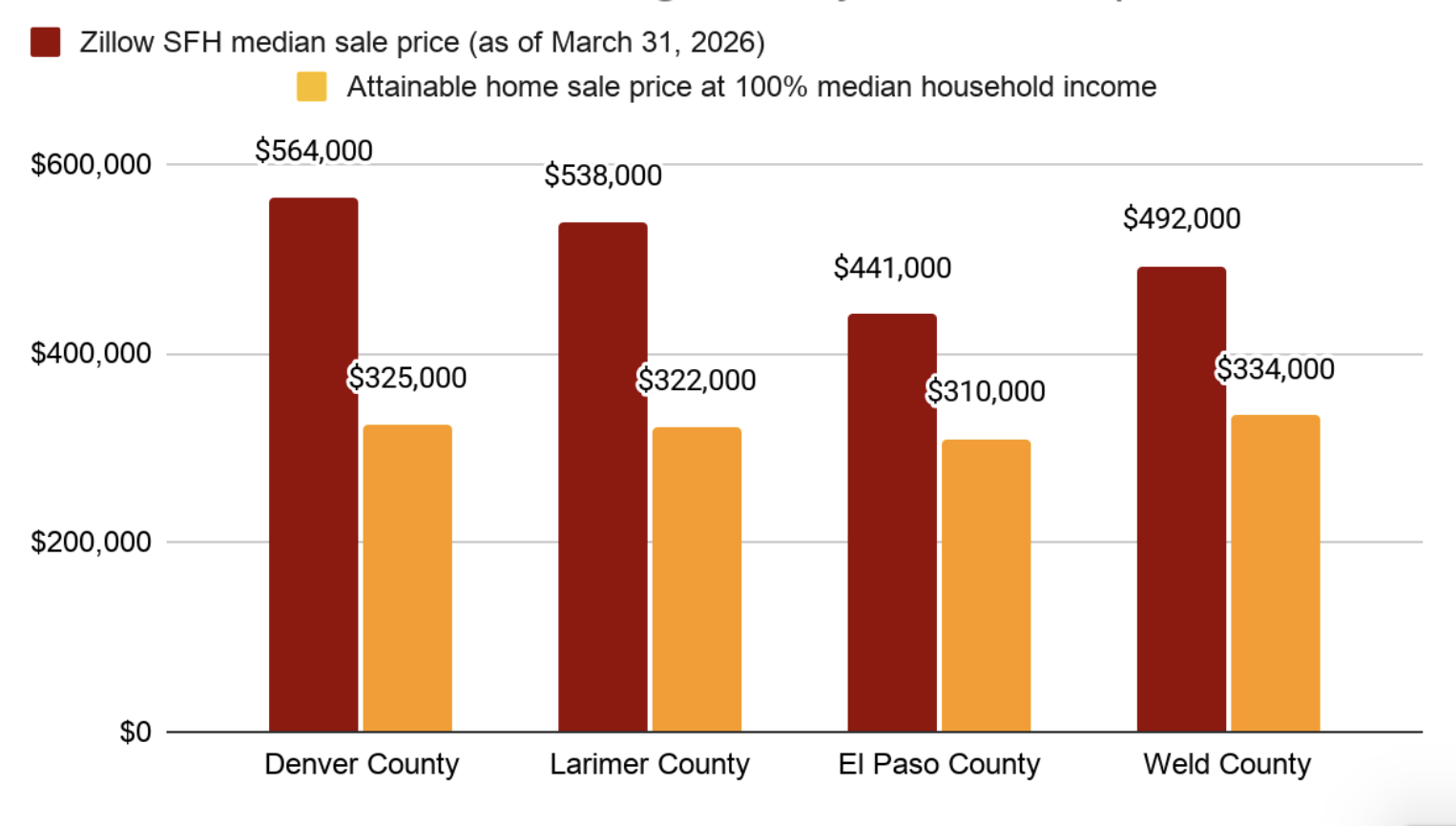
Figure 4: Bar chart comparing the median sale price of a single family home from data extracted on March 31, 2026 (red) and the calculated price of an attainable home (yellow) in each county. Of note is the large price gap in every region between an attainable home (based on each region’s household median income) and the current median sale price of a single family home (SFH). Prices have been rounded to the nearest $1,000. Attainable home prices were calculated using DTI 28/36 conventional loan ratio assuming 30 year mortgage, 20% spent on downpayment, standard 6.629% interest rate, 1.5% property tax, 0.5% insurance, and annual income of 2020-2024 ACS county median household income.
At the same time, despite a common misconception that new multifamily homes serve only the high end of the market, a Housing Forward Colorado/Thrive Economics analysis found that most apartments built in the last five years are relatively affordable for households across the Denver metro area. Nearly 80% of rental units built from 2020 to 2024 are affordable to households earning the area median income (100% of AMI) and nearly half are affordable to a household earning 80% of the area median income. In other words, apartments of all kinds play a role in meeting community housing needs. They can also be built at a scale and speed that addresses housing shortages.
Mismatch between income and housing costs
Multiple HNAs identified a mismatch in which limited housing options cause many higher-income households to occupy lower-cost homes that are better suited to the budgets of lower-income families. As a result, lower-income households are forced into higher-cost homes, to double up with friends or family, or, in the worst cases, onto the streets.
Variations of this issue exist across the Front Range, for example, in Weld County “Small-unit shortages force households into larger, costlier homes.” This causes lower income families to be cost burdened in “renting-up” because naturally affordable housing is filled by those “renting-down” (Figure 5). DRCOG succinctly paraphrases, “this mismatch indicates there is not enough housing supply available in other affordable price ranges. As a result, some households are forced to overspend to secure housing, while others opt for lower priced units that don’t match their income level.”
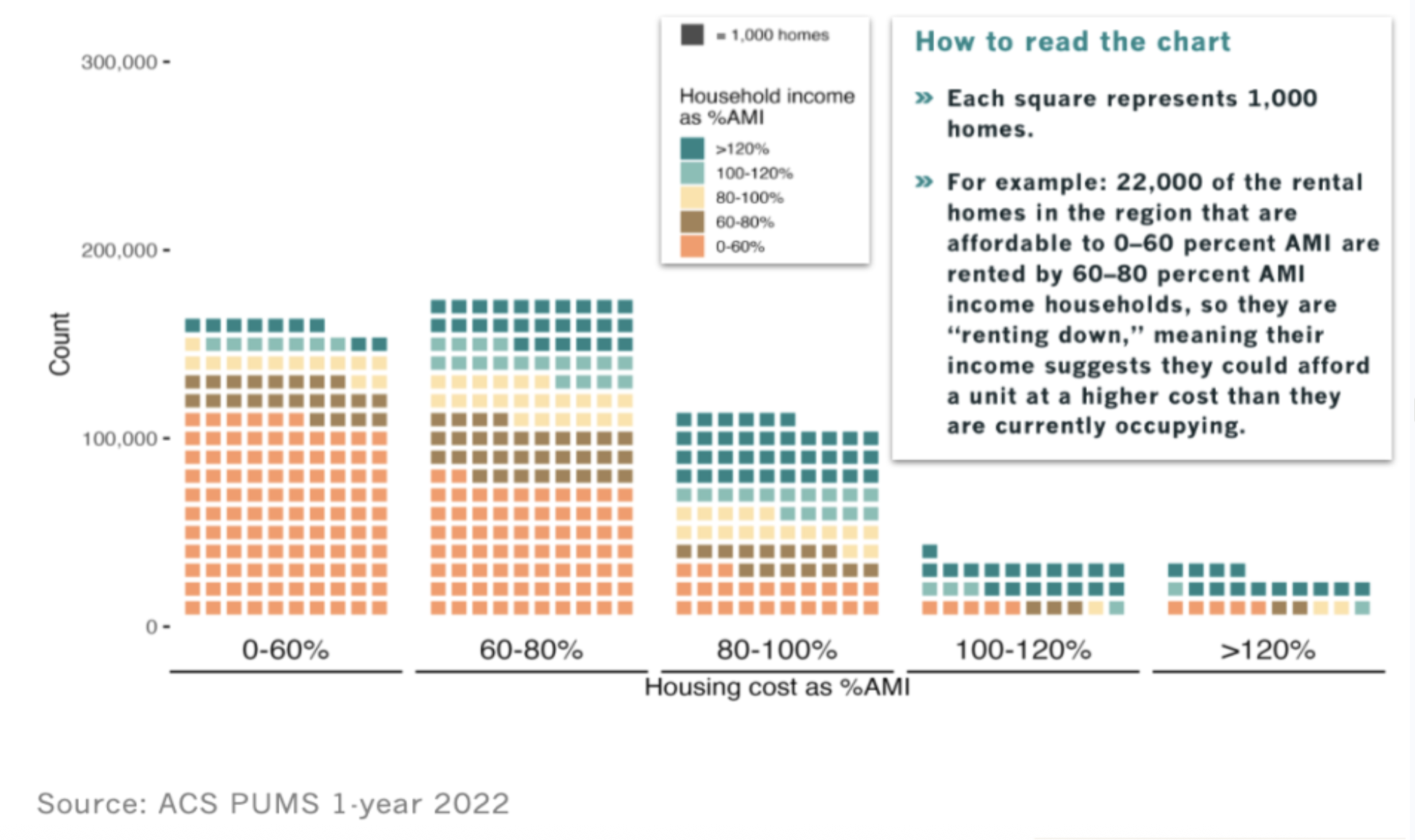
Figure 5: Visual representation of the mismatch between income levels and the cost of housing. This figure demonstrates that a large portion of higher earners (dark green) are in homes that cost significantly less than what they can reasonably afford without being cost burdened – on the left side of the graphic. “The greatest mismatch occurring in units suitable for incomes between 60–100 percent AMI … These mismatches highlight gaps in the housing stock at certain price points for specific income groups.” DRCOG HNA Appendix B Regional Housing Trends.
Addressing these mismatches in size, cost, availability, and location requires building much more housing and a greater diversity of housing types at a range of price points and sizes near jobs, schools, grocery stores, and other everyday destinations. This kind of infill development can allow people to live where they work and play at more affordable rates. These can come in the form of apartment and condo buildings, but also mid-scale homes like townhouses and triplexes. In the words of El Paso County, “addressing the shortfall will require a comprehensive approach that increases production at a range of price points while prioritizing both affordable rentals and attainable homeownership.”
While permitting trends show an increase in large multifamily apartment buildings, there are few attached homes, small multi-unit homes, and starter homes being permitted (Figure 6). Instead, large single-family homes (SFH) and large apartment buildings dominate the existing stock. With current production trends, they will dominate the future stock as well. Recognizing homeownership as a need for many, apartment buildings alone can’t solve the problem – but neither can the kinds of SFHs on the market today. El Paso County said that “meeting this need will require more than traditional single-family development pattern.”
HNAs consistently support this need for “missing middle” housing ownership opportunities. For example DRCOG says, “providing smaller and less expensive ownership options for increasing smaller household sizes is also important to serving an unmet need in the region.”
Middle housing allows for more attainable homeownership opportunities because the homes are inherently more affordable. For example, in Lakewood, townhomes built this century are $500,000 less than the average detached single-family home. Similarly, attached housing types persist as a cheaper option in Larimer County, Weld County, and the DRCOG region. Yet, they’re by far the least common new housing type.
County permits by housing type (2020-2025):
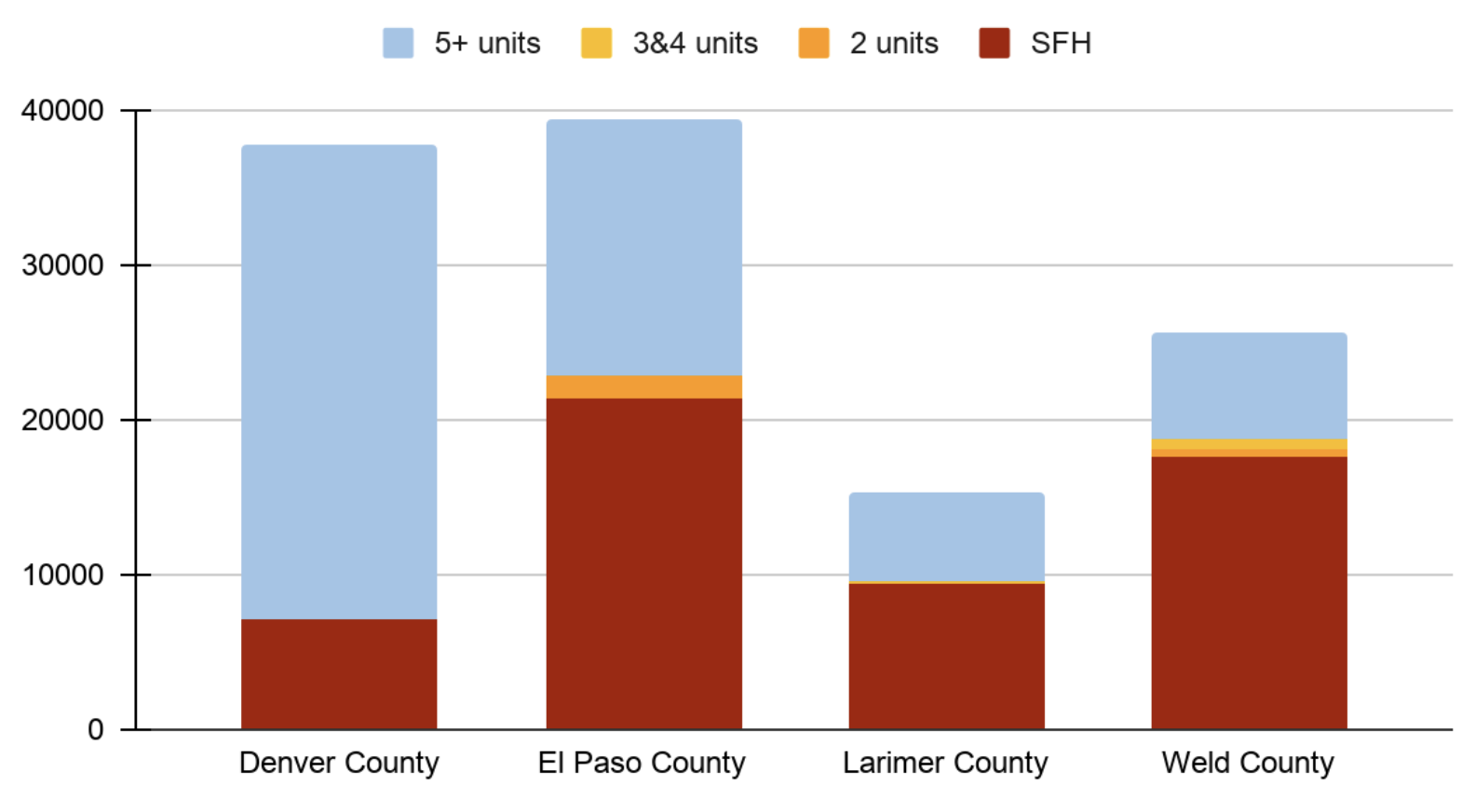
Figure 6: HUD SOCDS Building Permits data visualization of four counties from 2020-2025 demonstrating current production trends.
To meet the needs of Front Range families and workers, production trends need to include more attached and multifamily housing types for both renters and homeownership. It is also essential that subsidized housing for deeply affordable housing works in tandem with market-rate solutions.
3. Barriers to housing solutions are similar across the Colorado Front Range
The preceding sections examine what we have and need. This section looks at why the housing we need isn’t getting built. While some common barriers like interest rates, materials costs, and labor supply don’t have easily or locally-controlled solutions, many barriers to housing production are shaped by local government decisions. Barriers identified by HNAs are similar despite the differing physical and political landscape of each subregion. This final takeaway identifies three solvable barriers across HNAs: zoning and land use, permitting and procedures, and community input processes.
Zoning
The codes that dictate what can be built and where it can be built were the top barrier identified across the four regions. Zoning and land use regulations in the DRCOG region were found to only support a limited range of housing types, presenting a challenge for development outside of the single-family and apartment building parameters. To highlight the extent to which zoning codes are considered:
- 75% of Weld County’s “Identifying Development Challenges and Opportunities” section is focused on opportunities for improvement in their code.
- Colorado Springs characterized its own zoning and land use policies as “constraining the housing supply.”
- Similarly, Larimer County found a best practice to be land use reform to allow for more types of housing in single-family zones and to create more multifamily zoning as a whole. They said, “while regulatory reforms cannot fully address needs across the housing continuum, it is an important tool for many local governments to allow the housing market to keep pace with the county’s growing economy and create opportunities for more diverse product types and naturally affordable housing options.”
Permitting
While zoning focuses on what’s allowed, permitting and procedural obstacles make it significantly harder to get housing built. DRCOG reveals that as current procedures stand, “where allowed, multifamily and middle housing types are often subject to more rigorous design standards, lengthy review processes, and public hearings compared to single-family developments.” All four assessments identify slow permitting processes and complex multi-tiered procedures as an obstacle. HNA recommendations look to streamline these processes to minimize costly delays. One way to achieve this is by expanding what can be approved by city staff if it meets predetermined criteria (i.e., administrative review), as opposed to going through a discretionary review process, which usually involves public hearings.
For example, a top recommendation by Larimer County is to allow for small multifamily and affordable projects to be approved through an administrative process. These types of solutions simplify the process and actionably produce more housing with less time and money spent on delays. In fact, residential projects approved through administrative processes were 28% faster than those approved through discretionary processes, saving developers time and homebuyers money.
Proposition 123, Colorado’s dedicated affordable housing funding mechanism, and HB24-1313, the state’s Transit Oriented Communities law, lay the groundwork for more reform by requiring expedited or administrative review for certain housing types – but this is just the beginning. As the state works to address permitting and processes-related challenges, there is relatively little standardization in the complicated processes for getting different building forms approved. Without intervention, these processes become a battle between developers, public officials, and community members.
Community input processes
One of the most prevalent and nuanced barriers identified is the difficulty of working with communities where vocal minorities can have an outsized influence on individual project approvals. While changes in housing at the local level allow for customization of community needs, they also present a challenge. Civic engagement at a local level is generally much lower and tends to disproportionately include those who are more housing-secure and less in need of new housing, while lacking equivalent engagement from younger, lower-income people, renters, and people of color who stand to benefit.
In El Paso County, “[despite growing support] localized opposition exists, particularly among local homeowners concerned about zoning changes that increase neighborhood density, and residents concerned about the location or provision of affordable housing.” While a majority of community members consistently express support for small-scale multifamily housing, affordable housing, ADUs, and similar housing types, a small number of vocal opponents can stall or stop new development. As the demand for housing grows and needs change, it’s important to remember that the opposition showing up is not the average working person. The Colorado Springs and El Paso County HNA explains that a small demographic of local opponents to housing development and zoning changes are often homeowners who bought years ago on a lower-priced market. Polls and community engagement surveys included in and separate from these HNAs consistently show that the majority of community members support a wide variety of housing choices (Figure 7).
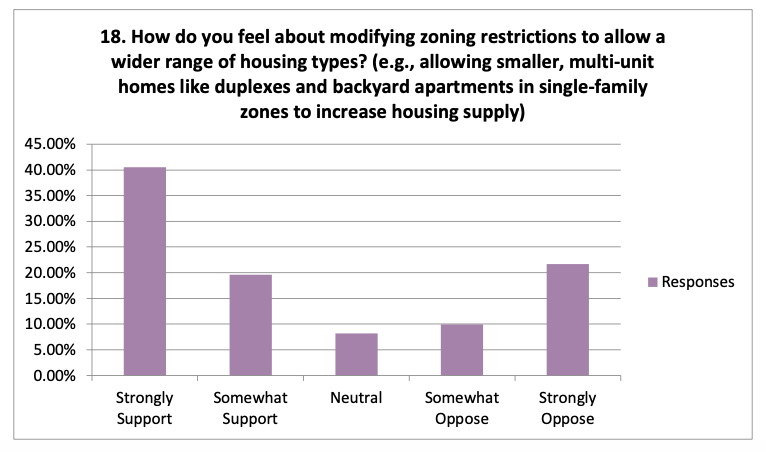
Figure 7: Poll results from the City of Colorado Springs and El Paso County Regional Housing Needs Assessment Appendix C – Community Questionnaire Results indicating the majority of community members support zoning reform to allow for middle housing. Note that approximately 60% of respondents are in support with only ~32% in opposition.
Conclusion
Looking ahead to the end of the year, the state will review statutorily required Housing Needs Assessments. Using the information gathered in their HNAs, each subject jurisdiction will next create a Housing Action Plan (HAP), present it at a public hearing, and submit it to the state for review by the beginning of 2028.
To be effective, these plans must meaningfully address the obstacles these communities identified. Even then, the law asks communities to plan, not to deliver; jurisdictions must adopt a plan and report their progress to the state, yet nothing requires tangible policy change, let alone for the housing to materialize. While there are no guarantees, we now have a data-grounded foundation for what each community needs, what’s standing in the way, and a pathway to reform.
__
Housing Forward Colorado advocates for smart growth by taking a holistic, sustainable approach to building for the future. Keep an eye out for more Housing Needs Assessments (HNAs) from communities across the state in the coming months, followed by Housing Action Plans (HAPs) over the next year.
—
Further reading
DRCOG Regional Housing Needs Assessment
Colorado Springs and El Paso County Regional Housing Needs Assessment
Larimer County Regional Housing Needs Assessment
Weld County Housing Needs Assessment
SB24-174 Sustainable Affordable Housing Assistance | Colorado General Assembly
Colorado Land Use Progress Report – August 2025
Colorado at a crossroads: Why smart growth beats sprawl
To receive news and analysis from HFC, subscribe at the bottom right of this page!